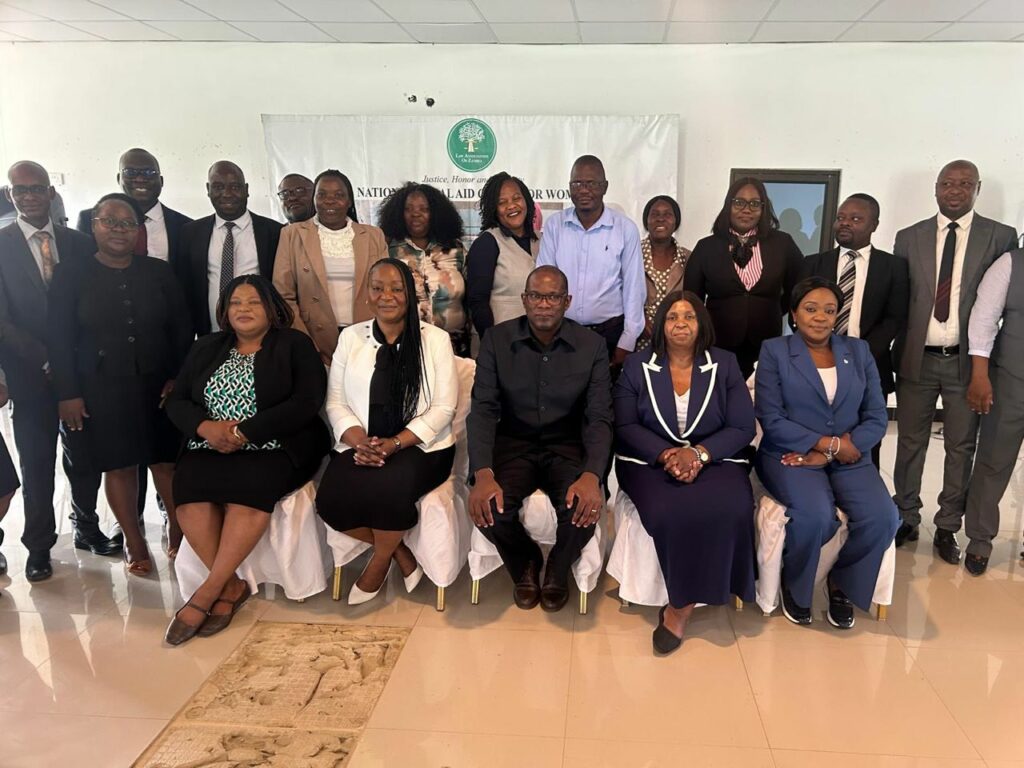
Choma | December 10, 2025 – In a transformative four-day workshop, Magistrates, Prosecutors, and Social Workers were trained on the challenges that make Gender-Based Violence cases particularly difficult to prosecute. Of particular focus were issues such as how trauma affects a victim’s memory and behaviour, how perpetrators groom and manipulate children, and why victims’ actions may appear inconsistent with common assumptions when they are, in fact, grounded in their lived experiences.
The training, centred on GBV case management and the Children’s Code Act No. 12 of 2022, brought together forty-six (46) frontline officials: twenty-two (22) Magistrates, twelve (12) National Prosecution Authority (NPA) Prosecutors, and twelve (12) Social Welfare Officers. It was led by a distinguished trio – Honourable Mr. Justice C.F.R. Mchenga of the Court of Appeal, Honourable Mrs. Justice S. K. Newa of the High Court, and the NPA’s Deputy Chief State Advocate, Mrs. Chali Mbewe-Hambayi, who heads the Gender-Based Crimes and Child Protection Department.
Mrs. Mbewe-Hambayi set the tone by addressing the core reasons cases fail. She explained that when a victim provides hesitant testimony or later modifies their account, it is not necessarily an indication of untruthfulness, but often the result of trauma, which can disrupt memory and trigger freezing or compliance responses. The workshop highlighted how to run a trauma-sensitive courtroom by adjusting language, pace, and overall environment to support victims.
A major focus was dispelling persistent myths. Participants learned that a victim returning to an abuser does not signify consent but reflects complex survival strategies. They also examined the deliberate and gradual nature of grooming, where perpetrators build trust with a child over time, making disclosure extremely difficult and emotionally confusing.
For Mrs. Mbewe-Hambayi, the event carried personal significance. Sharing the platform with Justice Chalwe Farai Ralph Mchenga, her former boss and mentor during his tenure as Director of Public Prosecutions, underscored a legacy of growth and guidance. “Much of who I am today was shaped by his mentorship,” she said.
Hosted by the National Legal Aid Clinic for Women, with support from the Swedish government through SIDA, the workshop marks a clear shift in approach. The goal is no longer simply to process cases, but to understand them. When magistrates, prosecutors, and social workers share this deeper knowledge, the entire justice chain for GBV victims becomes stronger, more coherent, and far more likely to deliver meaningful outcomes that extend beyond the courtroom.